Ketogenic diet synergistic reprogramming of both host and microbiome promotes tissue regeneration

Ketogenic diet synergistic reprogramming of both host and microbiome promotes tissue regeneration
Nagai, M.; Band, V.; Chi, L.; Smelkinson, M.; Schwarz, B.; Brandes, N. T.; Burns, A.; Perez-Chaparro, P. J.; McCauley, K. E.; Corral, D.; Bouladoux, N.; Link, V. M.; Zheng, L.; Constantinides, M. G.; Otto, M.; Moutsopoulos, N. M.; Belkaid, Y.
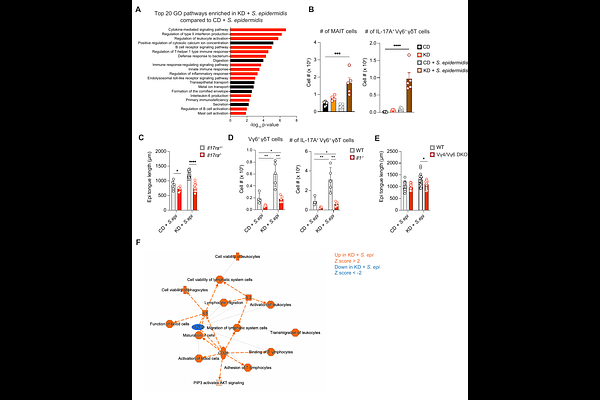
AbstractNutrition influences host physiological processes, yet how diets reshape host physiology, microbial functions, or host-microbe interactions to promote regeneration remains poorly explored. Here, we show that a ketogenic diet (KD), enriched in fats and low in carbohydrates, reprograms both skin microbial and immune functions to promote tissue repair. KD enhances IL-17A activity in gamma delta T cells and mucosal-associated invariant T (MAIT) cells, accelerating tissue repair, while KD-induced skin lipidomic alterations enhance both the abundance and metabolic output of Staphylococcus epidermidis. Metatranscriptomic and lipidomic analyses revealed increased riboflavin biosynthesis and sphingomyelinase (Sph)-dependent ceramide production in S. epidermidis under KD conditions. Genetic depletion of microbial ribD, a key enzyme for riboflavin biosynthesis, or of sph compromised the ability of the bacteria to promote tissue repair. Thus, host nutritional status drives tissue regeneration by synergistically rewiring host and microbial functions, providing new insights into how diet can be harnessed to regulate host physiology.