HIV-1 infection does not confer intrinsic resistance to cell death induced by cytotoxic T lymphocytes

HIV-1 infection does not confer intrinsic resistance to cell death induced by cytotoxic T lymphocytes
Bachmann, N.; Kim, B.; Simonetti, F. R.; Kovacs, C. M.; Hoh, R.; Deeks, S. G.; Siliciano, J. D.; Siliciano, R. F.
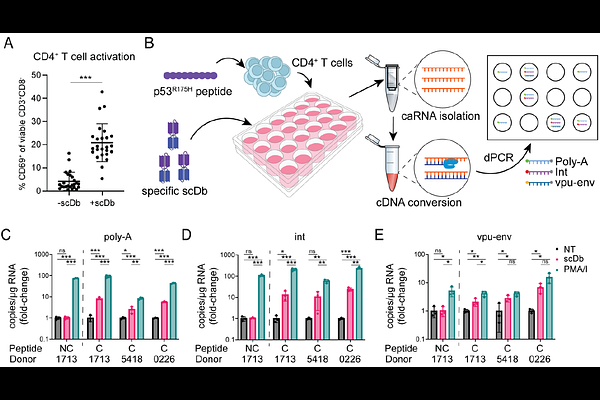
AbstractTo eliminate the persistent reservoir of cells harboring intact HIV-1 proviruses in people living with HIV-1 (PLWH), cure strategies like the Shock-and-Kill approach rely on effector functions of cytolytic T lymphocytes (CTL). CTL are involved in the initial control of HIV-1 viremia and target productively infected cells throughout the course of infection. However, selective killing of susceptible cells could generate a reservoir dominated by cells with dysregulated cell death pathways or other features conferring resistance to killing. Here, we use CTL-engaging single-chain diabodies to assess the rate of lysis of uninfected and HIV-1-infected primary CD4+ T cells under identical CTL pressure in the settings of both latent and active infection. Our findings indicate that with this mode of CTL triggering, infected and uninfected CD4+ T cells from PLWH on ART are generally lysed at identical rates, and that an apparent survival advantage for actively infected CD4+ T cells primarily reflects the reduced surface antigen availability through previously described Nef-dependent downregulation of MHC class I molecules. No survival advantage is observed when the CTL response is directed through diabodies to the stably expressed non-classical MHC class I molecule HLA-E, indicating equal susceptibility to cell death.