Morphological comparison between cell-like entities from mammalian tissues and Precambrian microfossils

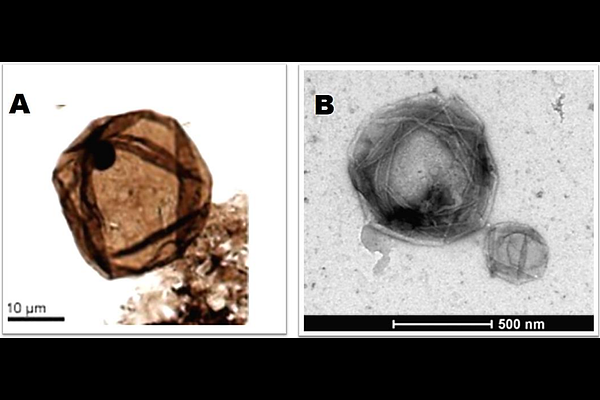
Morphological comparison between cell-like entities from mammalian tissues and Precambrian microfossils
LUSI, E. A.; Caicci, F.; Quartuccio, M.; Rifici, C.
AbstractThe fossil record of the Precambrian era preserves some of the earliest evidence of life, yet these ancient microfossils primarily reveal morphology rather than function, leaving unresolved questions about how early cells lived, replicated and evolved. The RNA world hypothesis proposes that primordial organisms relied on RNA for both information storage and catalysis, but direct living systems reflecting such biology remain poorly characterized. Here we describe cell-like entities isolated from mammalian tissues, measuring approximately 1-3 microns in diameter and exhibiting morphological similarity to a range of Precambrian microfossils. Ultrastructural comparisons reveal a high degree of correspondence with fossil taxa spanning the Paleoproterozoic to Ediacaran intervals (~1.8 Ga to ~551 Ma). In addition to these morphological features, the entities display biochemical characteristics, including RNA-dominant nucleic acid content and particle-associated reverse transcriptase activity. These observations indicate that the cell-like entities described are not inert, but represent biologically active systems. The combined ultrastructural and biochemical features raise the possibility that biologically active entities comparable to those observed in Precambrian microfossils may occur in contemporary biological contexts.