The morphotype approach to classification of aerial animals in radar data

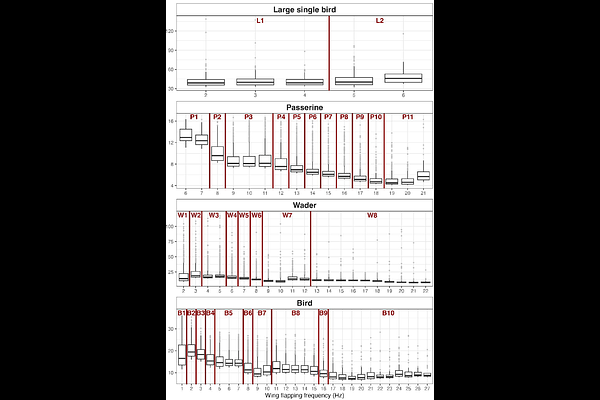
The morphotype approach to classification of aerial animals in radar data
Werber, Y.
AbstractRadar aeroecology is dedicated to making ecological inference about aerial wildlife from radar-derived information. While producing unique, large-scale datasets describing biological activity in the sky, radar methodologies are largely incapable of relating these to specific species and are thus taxonomically limited. I describe a computational method to increase taxonomic resolution in vertical looking radar data by dividing detected organisms into morphology and movement-based aerial morphotypes. Using the Birdscan MR1 radar target classifier, wing flapping frequency calculation and target size estimation, I demonstrate a nearly 8 fold increase in classification resolution of bird radar data from the Hula Valley Research station, Israel. Furthermore, by relating each species in the regions species pool to its relevant morphotype, I show that most of these newly separated classes are related to small numbers of species (1-10), providing realistic opurtunities to bridge the taxonomy gap in radar data. By using the morphotype approach, radar aeroecologists can start observing and discussing the concept of Aerodiversity, analogues to widely used biodiversity, a fundamental measure in ecology and conservation sciences. By analitically adressing taxonomy in radar-aeroecology, practitioners will increase the impact and dissemintation of their work and contribute to a better, more complete understanding of the aerial habitat.