Dietary Oxysterols Reprogram Hepatic Lipid Metabolism and Reshape the Gut Metabolome-Microbiome Interface

Dietary Oxysterols Reprogram Hepatic Lipid Metabolism and Reshape the Gut Metabolome-Microbiome Interface
Maldonado Pereira, L.; Mutawi, T. M. A.; Singh, A.; Sanderson, B.; Rekowski, M. J.; Barnaba, C.; Medina Meza, I. G.
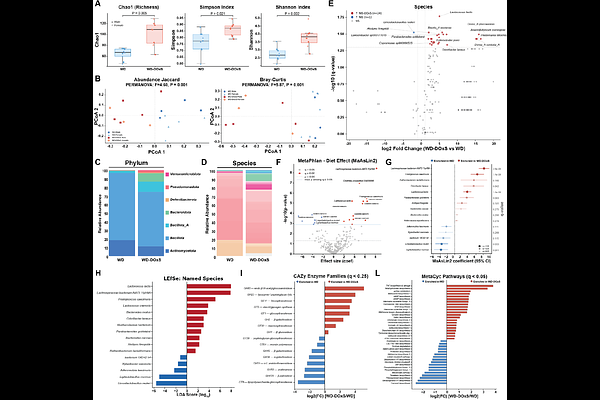
AbstractDietary oxysterols are biologically active cholesterol oxidation products ubiquitous in Western diets, yet their systemic effects on host metabolism and the gut microbiome remain largely unexplored. Here, we employed an integrated multi-omics approach - shotgun metagenomics, quantitative proteomics, untargeted metabolomics, and bulk RNA-seq - to characterize the impact of DOxS exposure on the gut-liver axis in rats fed a Western diet (WD vs. WD-DOxS). Hepatic proteomics revealed near-complete suppression of the mevalonate/cholesterol biosynthesis pathway, particularly in males, while de novo lipogenesis enzymes (Scd1, Fasn, Plin2) were paradoxically upregulated, consistent with dual oxysterol signaling through SREBP inhibition and LXR activation. Bile acid synthesis was concurrently suppressed, confirmed by metabolomics. Strikingly, RNA-seq across liver, heart, and brain detected virtually no differentially expressed genes, establishing that DOxS act predominantly through post-transcriptional mechanisms. In the gut, DOxS increased microbial -diversity while depleting Limosilactobacillus reuteri, with concomitant loss of the barrier-protective metabolite 3-indoleacrylic acid. Tissue-specific responses were widespread, with liver and colon frequently mounting opposing metabolic and immune responses to the same dietary challenge. Cross-omics integration revealed convergent microbiome-metabolite axes connecting microbial remodeling to both hepatic lipid reprogramming and colonic barrier disruption. These findings reposition dietary oxysterols from food-quality markers to active modulators of the gut-liver axis, with implications for metabolic disease and intestinal barrier integrity.