Calreticulin modulates the infection process and nodule organogenesis in the Phaseolus vulgaris-Rhizobium symbiosis

Calreticulin modulates the infection process and nodule organogenesis in the Phaseolus vulgaris-Rhizobium symbiosis
Ortega-Ortega, Y.; Carrasco-Castilla, J.; Juarez-Verdayes, M. A.; Nava, N.; Solis-Miranda, J.; Pacheco, R.; Quinto, C.
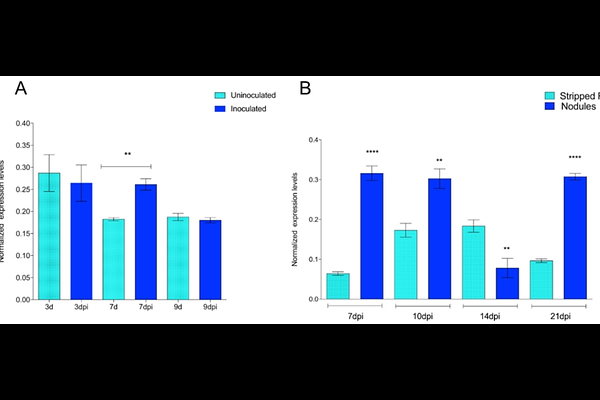
AbstractCalreticulins are multifunctional proteins involved in calcium homeostasis, protein folding, and cellular signaling. In common bean (Phaseolus vulgaris), the molecular mechanisms that regulate infection and nodule development remain incompletely understood. The main objective of this study was to characterize the role of the calreticulin gene PvCRT08 during infection and nodulation processes. We first analyzed the calreticulin gene family in the P. vulgaris genome and identified three members, with PvCRT08 showing the highest transcript accumulation in roots and after inoculation with rhizobia. Spatial and temporal promoter analyses in transgenic composite bean roots revealed PvCRT08 activity in root hairs and in infected cells and vascular bundles of mature nodules. RNA interference (RNAi)-mediated PvCRT08 down-regulation in transgenic roots increased the number of infection threads and enhanced nitrogen fixation efficiency, leading to the formation of larger and more functional nodules, although total nodule number was unaffected. In contrast, overexpression of PvCRT08 impaired infection thread progression, reduced the expression of key nodulation marker genes (PvCyclin and PvNIN), decreased nodule number, and diminished nitrogen fixation capacity. These findings identify PvCRT08 as a key regulatory component of early infection events and nodule development in common bean. Furthermore, the study provides new insights into the molecular control of symbiotic efficiency and highlights PvCRT08 expression is critical to optimize the equilibrium between infection efficiency and nodule functionality.