Phosphorylation of UBE2J1 at serine residue S184 contributes towards infection and cellular syncytialization by Vesicular Stomatitis Virus

Phosphorylation of UBE2J1 at serine residue S184 contributes towards infection and cellular syncytialization by Vesicular Stomatitis Virus
Algoufi, N. D.; Walsh, E. B.; Fallata, Z. I.; Alamri, S. S.; Hashem, A. M.; Fleming, J. V.
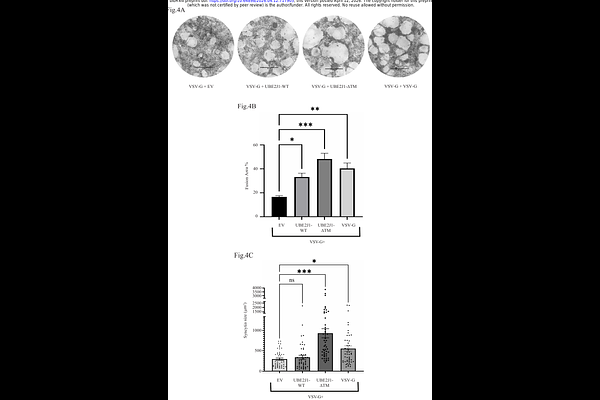
AbstractThe ubiquitin-conjugating enzyme UBE2J1 functions in the proteasomal degradation of proteins at the ER. Existing evidence suggests that it plays a role during viral infection, with elevated UBE2J1 levels generally associated with increased infection. This is particularly relevant for some RNA viruses; however, the regulation of UBE2J1 during infection has not been well studied. Here, we used a BHK21 cell model to demonstrate that UBE2J1 overexpression promotes the replication of Vesicular Stomatitis Virus (VSV), as indicated by a significant increase in viral titres. To better understand the underlying molecular processes, cells were co-transfected to express the VSV-G protein and wild-type UBE2J1 protein, and we observed a significant increase in the syncytial fusion area. This effect was not observed when catalytically inactive (C91S) or phospho-deficient (S184A) forms of the protein were used. Interestingly, overexpression of a truncated, non-ER localized form of UBE2J1 ({Delta}TM) led to the largest increase in the syncytial fusion area. This arose as a result of increased syncytia size, and may indicate an enhanced cellular role if soluble forms of UBE2J1 are not anchored to the ER. Additional studies using truncated, mutated and wild-type proteins confirmed that UBE2J1 increases VSV viral replication and is associated with an increase in the number of infection plaques. Considering the emerging evidence for UBE2J1 involvement in viral infection, our finding should help in understanding the role of this protein in viral pathogenesis and cellular processes linked to syncytialization.