Intrinsic features of the RNase E membrane targeting sequence specify RNA degradosome organisation and activity

Intrinsic features of the RNase E membrane targeting sequence specify RNA degradosome organisation and activity
Geslain, S. A. M.; Allen, G. E.; Geiser, J.; Redder, P.; Valentini, M.
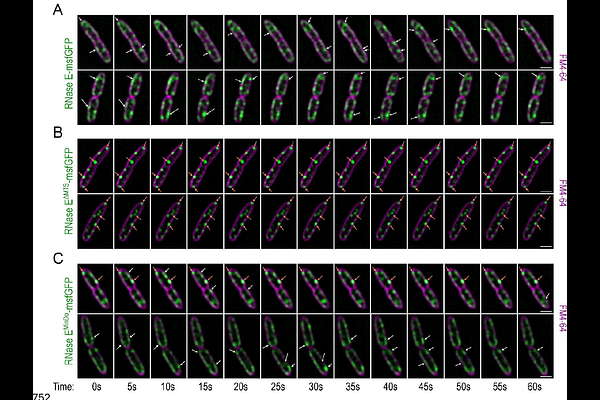
AbstractIn bacteria, transcription and RNA degradation are physically separated via segregation of the main ribonucleolytic machinery - the RNA degradosome - into phase-separated or membrane-anchored molecular assemblies driven by RNase E. Despite the widespread conservation of an amphipathic membrane anchor (MTS) in RNase E, the regulatory information embedded within this sequence and its biological importance remain poorly understood. Here, we have studied the importance of the Pseudomonas aeruginosa RNase E MTS for bacterial fitness or virulence and assessed its interchangeability. We show that amphipathicity is dispensable for foci scaffolding but necessary for proper foci morphology, dynamics, and localisation, although sequence modulates foci behaviour. Loss of the MTS additionally causes a drastic sensitivity to high salinity and a consistent virulence defect in Galleria mellonella larvae. Moreover, transcriptomics and analysis of mRNA spatial organisation reveal that the MTS mutant has specific stabilisation of localised membrane protein-encoding transcripts, together with abnormal operon processing. Altogether, our study highlights the elegant MTS-mediated control of spatial organisation and target selection, shaping the transcriptome and bacterial stress response.