Bacteriophage utilize pseudolysogeny to target non-replicating bacteria and CRISPR-resistant phages eliminate recalcitrant implant infections

Bacteriophage utilize pseudolysogeny to target non-replicating bacteria and CRISPR-resistant phages eliminate recalcitrant implant infections
Kalapala, Y. C.; Ammembal, A. K.; Jain, S.; Barge, N. S.; Agarwal, R.
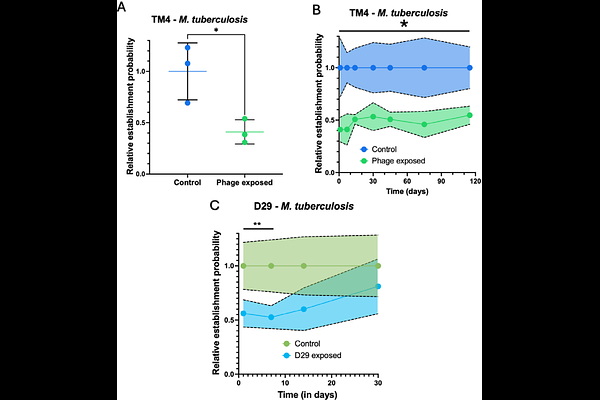
AbstractA key driver of bacterial infection treatment failure and relapse is the persistence of non-replicating bacterial subpopulations that emerge under stressors like nutrient starvation and immune pressure. These dormant cells evade antibiotics, fuelling recurrence and resistance. Bacteriophage therapy is a promising alternative, but its efficacy against non-replicating bacteria is poorly understood. Improving our understanding of bacteria-phage interactions under non-replicating conditions could greatly enhance phage therapeutic outcomes in clinics. By utilising various bacterial (Mycobacterium smegmatis, Mycobacterium tuberculosis, and Pseudomonas aeruginosa) and phage species, this study quantitatively demonstrates that lytic phages can infect non-replicating bacteria (under nutrient starvation, acidic pH or antibiotic pressure), persisting in a state of pseudolysogeny and resuming lysis upon bacterial regrowth. We find that the pseudolysogeny window is phage- and host-dependent, with degradation of extrachromosomal phage DNA leading to loss of pseudolysogeny. We find that Pseudomonas CRISPR defence plays a crucial role in phage DNA degradation even under non-replicating conditions, underscoring the need for its consideration in phage therapy design. We also demonstrated the in vivo relevance of pseudolysogeny and CRISPR-resistant bacteriophages in eliminating implant-associated and antibiotic-persistent Pseudomonas infections in mice. These findings highlight the need to consider phage-host dynamics and bacterial defences when designing phage-based strategies to target non-replicating bacteria and persistent infections.