Functional connectome harmonics capture early brain organization and maturity in neonates

Functional connectome harmonics capture early brain organization and maturity in neonates
Rosberg, A.; Mariani Wigley, I.; Barron, A.; Suuronen, I.; Merisaari, H.; Pulli, E. P.; Luotonen, S.; Li, R.; Bano, W.; Jolly, A.; Audah, H. K.; Hashempour, N.; Vartiainen, E.; Karlsson, H.; Karlsson, L.; Bethlehem, R. A. I.; Seidlitz, J.; Vohryzek, J.; Cabral, J.; Batalle, D.; Kringelbach, M. L.; Atasoy, S.; Tuulari, J. J.
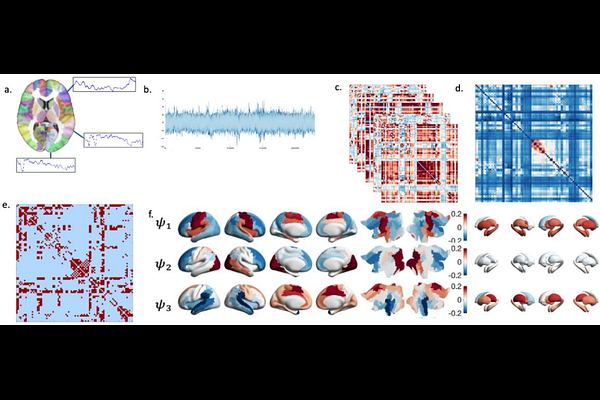
AbstractThe functional organization of the human brain is established early, yet the ontogeny of its large-scale functional gradients remains unclear. Using resting-state fMRI data from 714 neonates in the Developing Human Connectome Project, we mapped neonatal brain gradients via functional connectome harmonics (FCH). We identified adult-like sensory-to-multimodal and cognitive gradient patterns present at birth. Applying three FCH-derived metrics, entropy, power, and energy, we found that power and energy were higher in term-born compared to preterm neonates, while entropy was elevated in preterms. These metrics predicted up to ~30% of postmenstrual age, indicating their biological relevance. Our findings reveal that the neonatal brain possesses a robust gradient architecture underpinning early functional organization, offering novel biomarkers for assessing brain maturity and the impact of prematurity on neurodevelopment.