Influenza Virus Infection of an Immunocompetent Organotypic Model of the Human Respiratory Mucosa

Influenza Virus Infection of an Immunocompetent Organotypic Model of the Human Respiratory Mucosa
Perez-Riveron, A.; Deiss, E.; Alleon, A.; Ateni, P.; Li, J.; Foisset, F.; Lehalle, C.; Fauny, J.-D.; Frossard, N.; De Vos, J.; Smyth, R.; Debry, C.; Fath, L.; Mueller, C. G.; Voisin, B.; Flacher, V.
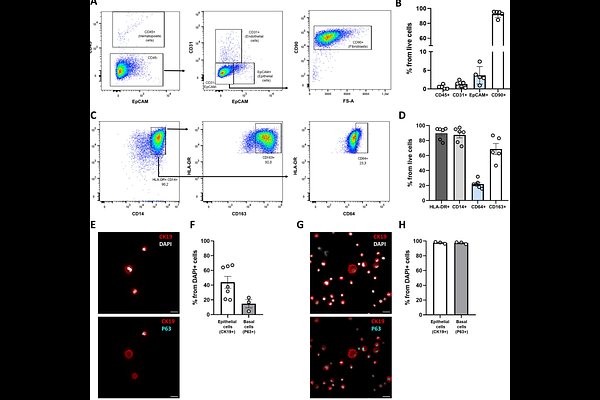
AbstractRespiratory infectious diseases are among the leading causes of global morbidity and mortality and remain a major public health concern. Progress in understanding early host-pathogen interactions has been hampered by the limited physiological relevance of existing experimental systems. Different models mimicking the human respiratory epithelium have been developed to study viral infections in vitro, such as tridimensional (3D) tissue models and organoids. However, many lack key features of human tissue architecture, particularly the lamina propria or immune cells. To address these limitations, we established an immunocompetent 3D model of the human respiratory mucosa by combining nasal epithelial cells isolated from nasal brushings, fibroblasts from mid-turbinate nasal biopsies, and macrophages derived from blood monocytes. These cells were sequentially seeded into collagen-chitosan scaffolds, resulting in a reconstructed respiratory mucosa closely resembling the in vivo nasal tissues. To further confirm the physiological relevance of the model, we infected it with influenza A virus. The mucosa model supported viral replication in the epithelium and consequently showed increased secretion of inflammatory cytokines and upregulation of type I interferon related genes, enabling the monitoring of early antiviral innate immune responses in a physiologically relevant context.