A scalable hippocampal code for flexible interval timing through persistent activity

A scalable hippocampal code for flexible interval timing through persistent activity
Citrin, K.; Heldman, R.; Ye, Z.; Wang, Y.
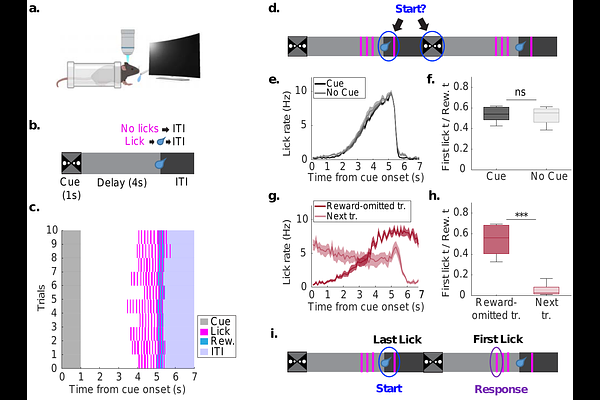
AbstractThe brain's ability to accurately estimate time across various intervals is crucial for flexible behavior. Through the discovery of ''time cells'', the hippocampus has emerged as a critical region for temporal processing. However, the hippocampal dynamics underlying flexible interval timing remain elusive. Here, utilizing behavioral perturbations, two-photon calcium imaging, and extracellular recordings in dorsal CA1, we identified a previously unknown pyramidal neuron subpopulation that flexibly scales its activity during interval timing. As mice performed a time-estimation task, CA1 time cells were scarce during the delay period. In contrast, persistently active cells (PACs) exhibited sustained activity from the onset of timing until the animal's behavioral response. PACs demonstrated temporal scaling: their activity stretched or compressed both with trial-to-trial variations in response time and across different delay durations. PACs comprised two subgroups with complementary ramping dynamics, and their population activity supported reliable decoding of elapsed time. Furthermore, PAC prevalence increased as behavior improved with learning, consistent with their behavioral relevance. Together, these findings revealed scalable sustained dynamics that complement canonical time cell sequences, providing a distinct hippocampal mechanism to support flexible timing behavior.