SM-Net: Learning a Continuous Spectral Manifold from Multiple Stellar Libraries

SM-Net: Learning a Continuous Spectral Manifold from Multiple Stellar Libraries
Omar Anwar, Aaron S. G. Robotham, Luca Cortese, Kevin Vinsen
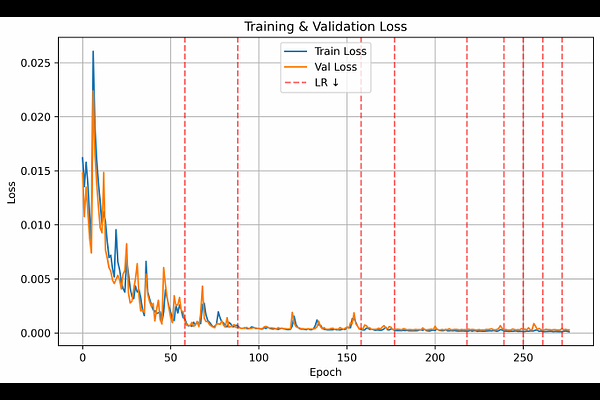
AbstractWe present SM-Net, a machine-learning model that learns a continuous spectral manifold from multiple high-resolution stellar libraries. SM-Net generates stellar spectra directly from the fundamental stellar parameters effective temperature (Teff), surface gravity (log g), and metallicity (log Z). It is trained on a combined grid derived from the PHOENIX-Husser, C3K-Conroy, OB-PoWR, and TMAP-Werner libraries. By combining their parameter spaces, we construct a composite dataset that spans a broader and more continuous region of stellar parameter space than any individual library. The unified grid covers Teff = 2,000-190,000 K, log g = -1 to 9, and log Z = -4 to 1, with spectra spanning 3,000-100,000 Angstrom. Within this domain, SM-Net provides smooth interpolation across heterogeneous library boundaries. Outside the sampled region, it can produce numerically smooth exploratory predictions, although these extrapolations are not directly validated against reference models. Zero or masked flux values are treated as unknowns rather than physical zeros, allowing the network to infer missing regions using correlations learned from neighbouring grid points. Across 3,538 training and 11,530 test spectra, SM-Net achieves mean squared errors of 1.47 x 10^-5 on the training set and 2.34 x 10^-5 on the test set in the transformed log1p-scaled flux representation. Inference throughput exceeds 14,000 spectra per second on a single GPU. We also release the model together with an interactive web dashboard for real-time spectral generation and visualisation. SM-Net provides a fast, robust, and flexible data-driven complement to traditional stellar population synthesis libraries.