Primate Astrocyte Evolution Controls the Tempo of Neuronal Development

Primate Astrocyte Evolution Controls the Tempo of Neuronal Development
Ciuba, K.; Figiel, I.; Dunski, E.; Virmani, G.; Dehingia, B.; Abbas, M.; Hemmatvand, K.; Piotrowska, A.; Borsuk, E.; Hofman, B.; Rava, V.; Taverna, E.; Włodarczyk, J.; Pekowska, A.
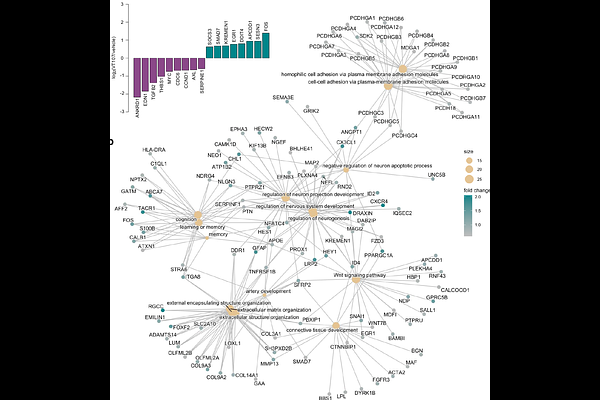
AbstractProlonged neuronal maturation, also referred to as neoteny, constitutes a hallmark of human brain evolution. Yet, the mechanisms controlling neotenic brain development remain poorly understood, and have been defined as neuron-intrinsic. Astrocytes shape synapse formation, activity, and elimination, and have changed substantially between humans and other species. Yet, whether the evolutionary divergence in astrocytes shapes the timing of neuronal maturation is unknown. Here, we show that astrocytes from humans and their closest living relatives, chimpanzees, exert contrasting effects on neuronal maturation: chimpanzee astrocytes accelerate it, whereas human astrocytes delay it, without affecting neuronal survival. Through comparative transcriptomics and epigenomics, we find that evolutionarily reduced APOE expression in human astrocytes underlies the observed delay in neuronal maturation: restoring APOE levels in human astrocytes accelerates neuronal development. We further establish that the Hippo-TEAD signaling represses APOE expression in human astrocytes, revealing a link between the enhanced morphological complexity of human astrocytes and the observed reduced tempo of neuronal development in their presence. Strikingly, neuronal genes differentially impacted by human and chimpanzee astrocytes are associated with schizophrenia, Alzheimer's disease, and epilepsy, linking astrocyte evolution to disease vulnerability. Altogether, these findings establish that brain neoteny is partly a glial phenomenon, revealing that understanding the pace of human brain development requires understanding how astrocytes, not only neurons, have evolved.