Classical HLA Allele and Haplotype Frequency Estimates in US Populations

Classical HLA Allele and Haplotype Frequency Estimates in US Populations
Gragert, L.; Madbouly, A.; Bashyal, P.; Wadsworth, K.; Kempenich, J.; Bolon, Y.-T.; Maiers, M.
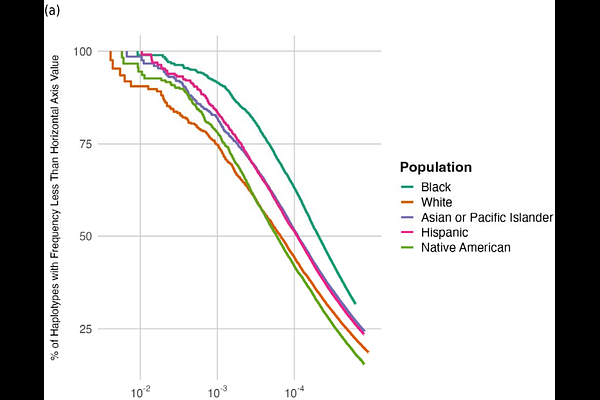
AbstractThe human leukocyte antigen (HLA) system is the primary determinant of donor selection in allogeneic hematopoietic cell transplantation (HCT) and plays a central role in solid organ transplantation, immune-mediated disease studies, evolutionary population genetics, and immunotherapy. Large-scale sampling of registry participants reflecting major US ancestry groups allows for characterization of the complex landscape of HLA haplotype diversity for the classical HLA class I (HLA-A, HLA-B, HLA-C) and HLA class II (HLA-DRB1, HLA-DRB3, HLA-DRB4, HLA-DRB5, HLA-DQA1, HLA-DQB1, HLA-DPA1, and HLA-DPB1) genes. Here we present nine-locus classical HLA allele and haplotype frequency estimates for five broad (Black, White, Asian or Pacific Islander, Hispanic and Native American) and 21 detailed US populations based on 9,671,082 donors with targeted genotyping by DNA-based methods. Frequency estimation used an expectation maximization (EM) framework specifically adapted to handle mixed-resolution and ambiguous HLA genotyping data. Advancements in next-generation sequencing provide extensive HLA genotyping, offering new insights into the haplotype structure and diversity of the human MHC complex, expanding knowledge especially for HLA class II haplotypes. Population analyses reveal that the most common high-resolution haplotypes are predominantly population-specific, with only three haplotypes shared across the top-100 lists of all five broad population groups, and that Black populations exhibit the greatest nine-locus haplotypic diversity, a pattern that persists after controlling for differences in registry sample size. These frequencies, derived from the largest US cohort to date, support clinical decision-making and research in histocompatibility, immunogenetics, and transplantation and are publicly available at https://zenodo.org/records/17966993.