MLL3/4 methyltransferases regulate the differentiation of pluripotent stem cells via cellular respiration

MLL3/4 methyltransferases regulate the differentiation of pluripotent stem cells via cellular respiration
Nur, S. M.; Jia, Y.; Ye, M.; Lepak, C. A.; Ben-Sahra, I.; Cao, K.
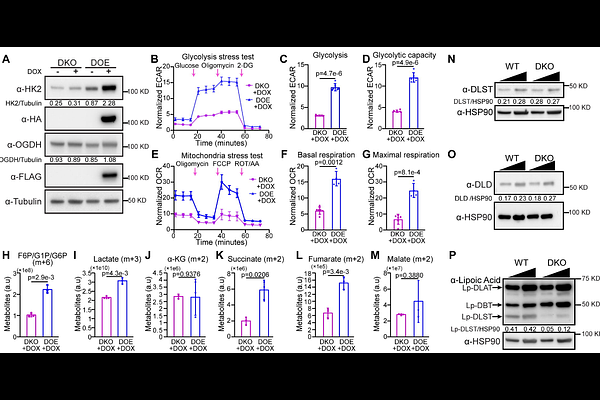
AbstractEnhancer-regulating epigenetic modifiers play critical roles in normal physiological processes and human pathogenesis. The major enhancer regulator paralogs MLL3 and MLL4 (MLL3/4) belong to the lysine methyltransferase 2 (KMT2) family, which catalyzes the methylation of lysine 4 on histone H3 (H3K4me). MLL3/4 are required for enhancer activation and are essential for mammalian development and stem cell differentiation. Recent studies have linked MLL3/4 with different metabolic pathways in the context of stem cell self-renewal and cancer cell growth; however, the underlying mechanisms remain elusive. Here, we utilize Seahorse extracellular flux analysis, stable isotope tracing, stem cell biology techniques, and transcriptomic analysis to investigate the functional relationship of MLL3/4, cellular respiration, and stem cell differentiation. Our results indicate that the loss of MLL3/4 impairs glycolytic activity and mitochondrial respiration in murine embryonic stem cells by downregulating the rate-limiting glycolytic enzyme Hexokinase 2 (HK2) and impairing the function of the Alpha-ketoglutarate dehydrogenase (OGDH) complex. Furthermore, simultaneously overexpression of HK2 and OGDH rescues defects in both cellular respiration and differentiation caused by MLL3/4 loss. Taken together, our study reveals a novel mechanism by which epigenetic machineries such as MLL3/4 govern the differentiation of pluripotent stem cells and facilitates the understanding of disease pathogenesis driven by enhancer malfunction.