Cisplatin exposure alters long-term metabolic phenotype of male, but not female, high-fat diet-fed mice.

Cisplatin exposure alters long-term metabolic phenotype of male, but not female, high-fat diet-fed mice.
Basu, L.; Palaniyandi, J.; Ching, M. E. A.; Hoyeck, M. P.; van Zyl, E.; Bruin, J. E.
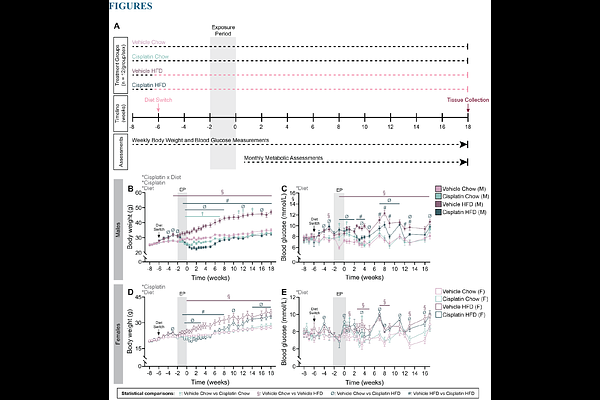
AbstractCancer survivors face an increased risk of metabolic complications compared to the general population. Our group demonstrated that cisplatin, a platinum-based chemotherapeutic agent, robustly disrupts insulin secretion in vitro in mouse and human islets, and reduces plasma insulin levels in mice 2 weeks post-in vivo exposure. The long-term effects of in vivo cisplatin exposure alongside a pre-existing metabolic stressor, such as high-fat diet (HFD) feeding, have not been characterized. In the present study, male and female mice fed either a standard rodent chow or a 45 kcal% HFD were exposed to vehicle or 2 mg/kg cisplatin every other day for 2 weeks and then tracked for 18 weeks. Cisplatin exposure substantially influenced the metabolic phenotype of HFD-fed males but had limited impact on female HFD-fed mice. Vehicle-HFD and cisplatin-HFD male mice were both glucose intolerant compared to chow-fed controls yet, cisplatin-HFD male mice were lean, lacked a compensatory hyperinsulinemia response, and displayed increased insulin sensitivity compared to vehicle-HFD and vehicle-chow male controls. Additionally, transcriptional changes in islets isolated at 18-weeks post-exposure were largely cisplatin-driven in male mice, but diet-driven in female mice. Our study demonstrates that HFD-fed male mice exposed to cisplatin display persistent and exacerbated metabolic dysregulation relative to controls.