An unrecognized host response to microbial exposure resets circadian timing

An unrecognized host response to microbial exposure resets circadian timing
Mo, D.; Lam, T.; Baker, E.; Fraser, O. P.; Dorling, J.; O'Neill, J. S.; van Ooijen, G.; Dodd, A. N.; Partch, C. L.; Crosby, P.; Kimmey, J. M.
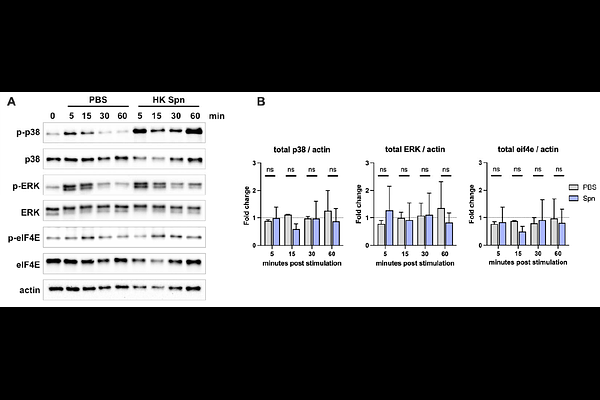
AbstractAs ubiquitous features of every natural environment, microbes have profoundly shaped eukaryotic biology throughout evolution. Circadian clocks evolved in all domains of life as central regulators that align physiology with environmental cycles, yet whether they respond directly to microbial signals remains unknown. Here, we demonstrate that evolutionarily diverse microbes potently reset mammalian cellular clocks and can drive phase shifts in plants and algae, indicating cross-kingdom effects of microbes on circadian rhythms. In mammals, exposure to soluble bacterial components distinct from canonical innate immune ligands induces acute PER2 upregulation independently of Bmal1 or nascent transcription. A targeted inhibitor screen and biochemical assays implicate p38 MAPK as a modulator of this response. Taken together, this positions bacterial exposure as a previously unrecognized circadian clock input, revealing a new axis of host-microbe interaction that modulates biological timing at the cellular level.