Single-cell atlas of pig-to-monkey kidney xenotransplantation reveals macrophage chimerism and an IFN-ε orchestrated graft protective immune niche

Single-cell atlas of pig-to-monkey kidney xenotransplantation reveals macrophage chimerism and an IFN-ε orchestrated graft protective immune niche
Wang, H.; Chen, J.; Chang, Y.; Ci, W.; Hua, X.; Yu, F.; Yang, S.; Zhang, X.; Song, J.; Fan, Y.
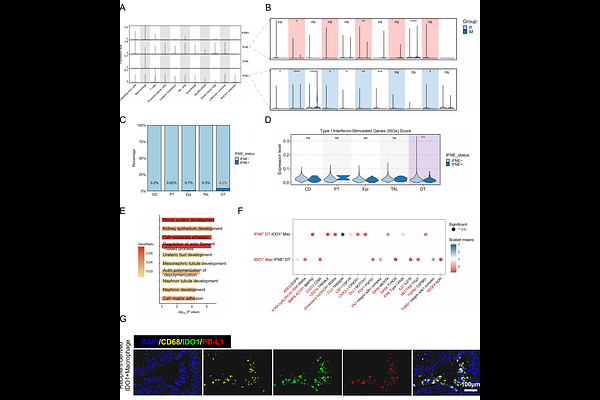
AbstractThe clinical translation of xenotransplantation is constrained by an incomplete understanding of the cellular circuitry governing graft rejection versus adaptation under current immunosuppressive regimens. Here, we present a high-resolution single-cell atlas of pig-to-monkey kidney xenotransplantation in a preclinical model, capturing the early immune dynamics preceding graft loss. Our analysis reveals a landscape dominated by innate immunity, characterized by species-specific distribution of macrophages. We identify recipient-derived macrophage subsets (ACKR1+, FN1+, MARCO+, IDO1+) enriched for multiple immune checkpoint molecules, alongside donor-resident subpopulations (APOE+, CCL2+, IL-1A+) exhibiting pro-inflammatory pathogenic signatures, and leverage their transcriptional profiles to computationally predict candidate therapies (belatacept, abatacept, pexidartinib). Further analysis demonstrates that despite divergent differentiation trajectories, both recipient-derived and donor-resident macrophages converge toward hybrid M1/M2 states at their terminal stages. Notably, we uncover a graft-protective circuit orchestrated by epithelial-derived interferon-epsilon (IFN-{varepsilon}), which specifically engages multiple subsets including IDO1+ macrophages to establish a localized immune-tolerant niche. This study establishes the xenograft epithelium as an active participant in immune modulation via the IFN-{varepsilon} axis and reveals macrophage functional chimerism as a key actionable feature of cross-species immune responses.