Spindle pole proteins confine chromosomes to ensure their expulsion during female meiosis

Spindle pole proteins confine chromosomes to ensure their expulsion during female meiosis
Yaguchi, K.; Chen, L.; Sangcheshmeh, A. M.; Tafur, J.; Familiari, N. E.; Grow, E. J.; Rosen, M. K.; Woodruff, J. B.
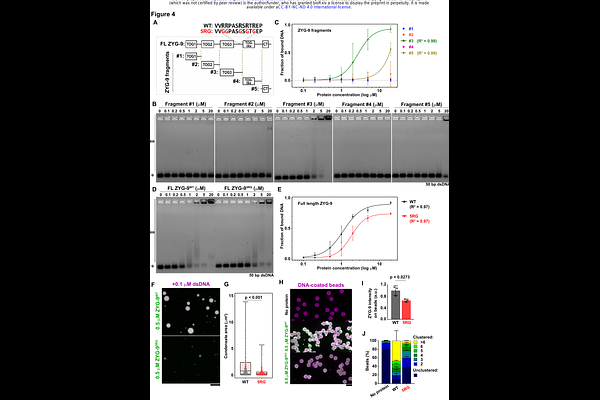
AbstractAnimal oocytes undergo highly asymmetric divisions to expel excess copies of their genome into compact cells called polar bodies. This requires tight clustering and cortical positioning of meiotic chromosomes, yet the mechanism remains incompletely understood. Using C. elegans oocytes, we found that the meiotic spindle pole protein ZYG-9/ch-TOG delocalizes from microtubules to spread along the surface of chromosomes and prevent their dispersal in meiotic anaphase. This effect was more pronounced in the absence of the spindle, where ZYG-9 formed into a micron-scale droplet that enveloped all chromosomes. Purified ZYG-9 was sufficient to bind DNA and coat reconstituted chromatin. Mutations that perturb ZYG-9-DNA binding impaired chromosome packaging into polar bodies, resulting in oocytes carrying extra chromosomes and reduced fertility. We propose that liquid-like assemblies of spindle pole proteins are repurposed as surface-acting glue to tightly package meiotic chromosomes into polar bodies, thus ensuring oocytes have the correct genome copy number.