A genetic toolkit to reduce wheat immunogenicity and incidence of celiac disease

A genetic toolkit to reduce wheat immunogenicity and incidence of celiac disease
Rottersman, M. G.; Laudencia-Chingcuanco, D.; Zhang, W.; Guzman-Lopez, M. H.; Lin, J. W.; Zhang, J.; Caseys, C.; Burguener, G.; Kim, S.; Zhang, X.; Yunusbaev, U.; Akhunov, E.; Lee, J.-Y.; Dubcovsky, J.
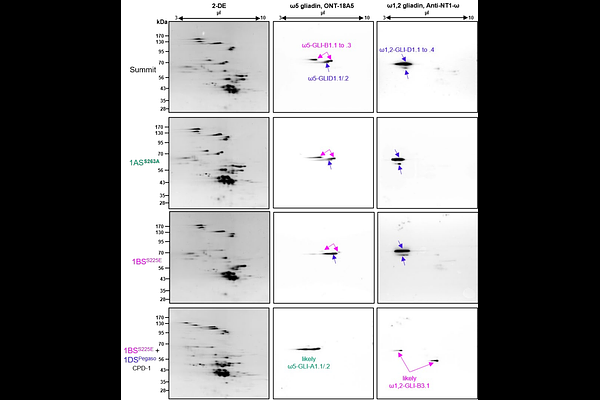
AbstractCeliac disease (CeD) is an immune-mediated condition triggered by wheat gluten in genetically predisposed individuals. The immune reaction in people with CeD is driven by particular gluten amino acid sequences, or immunogenic epitopes. Some of these epitopes elicit strong immune responses in the majority of CeD patients and are designated as immunodominant epitopes. Previous research has shown correlations between the amount of immunogenic wheat epitopes consumed and the onset of CeD, suggesting that reducing wheat immunogenic epitopes may reduce CeD incidence at the population level. Gluten consists of gliadins and glutenins, with gliadins having the majority of the immunodominant epitopes and glutenins playing a major role in dough strength and breadmaking quality (BMQ). This study used radiation-induced deletions, chemical mutagenesis, and natural variation in wheat (Triticum aestivum) to generate genetic stocks with reduced immunogenic epitope content. Most lines were developed in the wheat cultivar Summit, for which we produced a full genome assembly and annotation. We used exome capture to characterize these deletions and identify prolamins located within and outside the deletions. We combined different deletions and developed molecular markers to facilitate their deployment. For chromosome arms 1BS and 1DS, we generated two alternative lines: one lacking immunogenic epitopes for the development of CeD-safe genetic stocks for research purposes, and another retaining selected glutenins for breeding commercial lines with reduced immunogenicity and adequate BMQ. By making these non-transgenic genetic stocks publicly available, we aim to accelerate the development of wheat varieties with reduced immunogenicity and, eventually, a fully CeD-safe wheat.