A non-invasive method of air pollutant exposure in an avian model of development

A non-invasive method of air pollutant exposure in an avian model of development
Garner, D. R.; Clarke, S.; Durrans, J. L.; Stafford, P.; Herigstad, M.
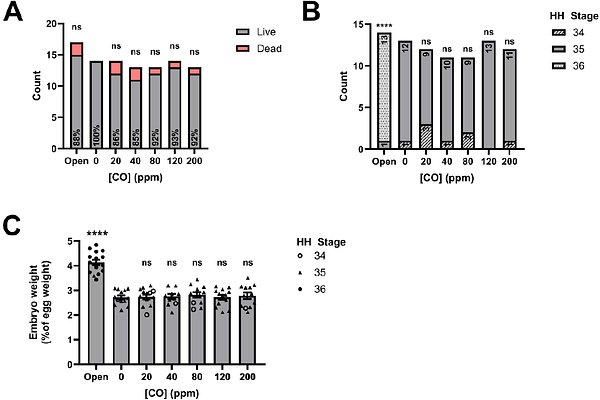
AbstractAir pollution is a growing public health concern. The developing fetus is particularly vulnerable, with exposure during pregnancy linked to negative developmental health outcomes. Teratogenic studies rely on the use of model organisms, such as the chick embryo, a well-established model of human development. However, existing protocols for the exposure of chick embryos to gaseous and aerosol pollutants have financial and technical limitations. Here, we present a novel, non-invasive method for the long-term exposure of chicken embryos to a gaseous toxin, carbon monoxide (CO). Exposure is performed inside airtight incubation boxes, which can be used in a standard laboratory incubator. We demonstrate reliable dosing of precise internal CO concentrations up to 200ppm, using a simple volumetric approach. Following optimization of key incubation parameters, temperature and turning frequency, we determined the impact of the system on embryo viability and development. Closed box incubation caused minor developmental delay but had no effect on chick embryo viability. Internal oxygen concentrations remained above hypoxic levels. No significant effects of exposure up to 200ppm CO were observed on embryo viability, weight or developmental stage. In conclusion, we present a non-invasive, affordable, accessible and technically straightforward exposure method for air pollutant teratogenicity studies. This method can be applied to other model systems and organisms beyond the chick embryo as well as to other gaseous and aerosol toxins. Thus, the system offers a suitable platform for future research on teratogenic doses, mechanisms and effects of air pollutants.