Three nitrogen atoms turn old kinase inhibitors into new targetable remedy

Three nitrogen atoms turn old kinase inhibitors into new targetable remedy
Besztercei, B.; Antal, R.; Tahtivaara, L.; Lappetelainen, B.; Jaaskelainen, N.; Szappanos, A.; Lukats, A.; Pal-Kajtar, A.; Budai, A.; Cerrada-Gimenez, M.; Kovacs, K. A.
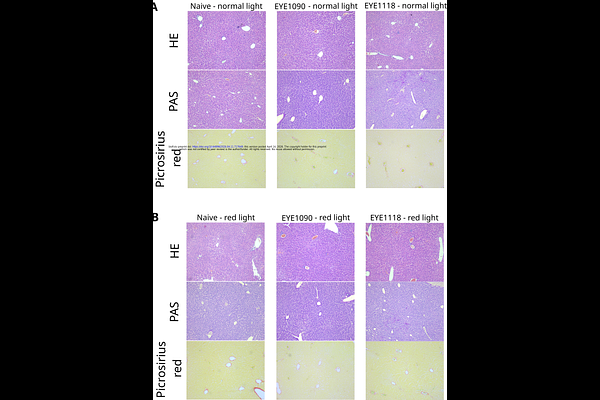
AbstractPathological neovascularization in the eye is a significant contributor to vision loss in diseases such as age-related macular degeneration (AMD) and diabetic retinopathy. While anti-VEGF biologics are effective, they require repeated intravitreal injections and carry procedural risks. Here, we report a novel principle for designing photoactivatable VEGFR2 inhibitors, along with two examples, EYE1090 and EYE1118, engineered from the sunitinib and vorolanib scaffolds, respectively. Azido-functionalization in these molecules enables light-triggered receptor binding while preserving potent inhibition in the dark. Both compounds exhibit significantly enhanced activity upon exposure to green light capable of reaching the retina, also in the elderly. In vitro, the compounds robustly inhibited angiogenesis and endothelial migration that was further potentiated by light. In vivo, orally administered EYE1090 and EYE1118 suppressed VEGF-induced retinal leakage and reduced lesion size in a mouse model of choroidal neovascularization at doses tenfold lower than parental compounds. Photoactivation also influenced compound biodistribution, suggesting light-guided targeting. Acute toxicity studies revealed no hepatotoxicity. This strategy exploits the natural light-focusing anatomy of the eye to locally activate systemically administered drugs, thereby reducing therapeutic doses and systemic exposure. Our findings introduce a light-targeted pharmacological approach for treating retinal diseases using photoactivable kinase inhibitors.