A metabolic model based on a pangenome core unveils new biochemical features of the phytopathogen Xylella fastidiosa

A metabolic model based on a pangenome core unveils new biochemical features of the phytopathogen Xylella fastidiosa
Corbin Agusti, P.; Alvarez-Herrera, M.; Roman Ecija, M.; Alvarez, P.; Tortajada, M.; Landa, B. B.; Pereto, J.
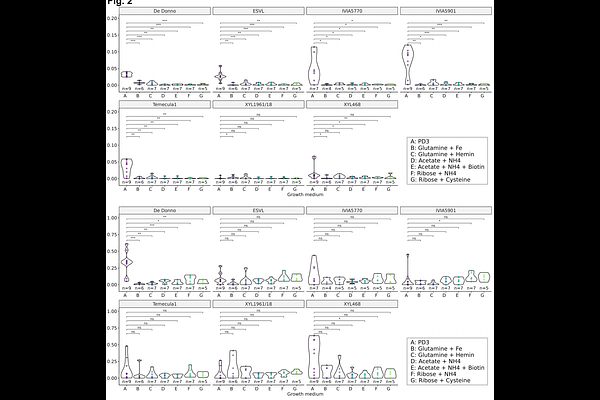
AbstractXylella fastidiosa is a xylem-limited phytopathogen bacterium responsible for severe diseases in numerous plant species of major agricultural importance. Despite its economic impact, its metabolism remains poorly characterized due to the bacterium's fastidious growth and the limited availability of defined culture media. In this work, we reconstructed the first pangenome-based genome-scale metabolic model for X. fastidiosa, integrating the conserved metabolic capabilities of 18 strains representing five described subspecies. The resulting core metabolic model, Xfcore, was manually curated and used to investigate the metabolic potential of the species. Model simulations predict minimal nutritional requirements that guide the formulation of defined media capable of supporting biofilm formation in vitro. Analysis of the metabolic network also suggests an undescribed metabolic pathway that enables growth on acetate as a sole carbon source. Furthermore, the model predicts that X. fastidiosa could overproduce polyamines, compounds previously associated with virulence in other phytopathogens. Experimental analyses confirm the production and secretion of polyamines in several X. fastidiosa strains, providing the first in vitro evidence of polyamine production in this pathogen. These findings suggest that polyamine biosynthesis may represent an uncharacterized virulence factor in X. fastidiosa, potentially contributing to bacterial protection against host-induced oxidative stress. Overall, the Xfcore model provides a systems-level framework to explore the metabolism of X. fastidiosa, generate testable hypotheses about its physiology and virulence, and establish a basis for future strain-specific reconstructions and host-pathogen metabolic interaction studies.