An immune-stimulating antibody conjugate spatiotemporally targeting CD47 and TLR9 elicits macrophage-dependent tumor clearance and durable anti-cancer adaptive immunity

An immune-stimulating antibody conjugate spatiotemporally targeting CD47 and TLR9 elicits macrophage-dependent tumor clearance and durable anti-cancer adaptive immunity
Suk, J. S.; Kong, B.; Chung, S. W.; Lee, D.; Kwak, G.
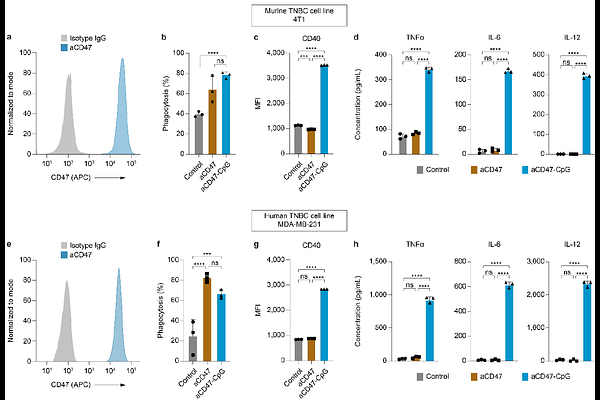
AbstractCluster of differentiation 47 (CD47) blockade promotes tumor cell phagocytosis; however, transitioning this initial innate immune event into durable anti-cancer adaptive immunity and tumor control remains a critical challenge. To address this translational gap, we have engineered aCD47-CpG, a novel immune-stimulating antibody conjugate (ISAC) coupling a CD47-blocking antibody (aCD47) to a Toll-like receptor 9 agonist, unmethylated CpG, to enable synchronized deployment of co-stimulatory signals during tumor engulfment. This ISAC, aCD47-CpG, but not the parent aCD47, reprograms macrophages toward an anti-tumor M1-like phenotype, enhances antigen cross-presentation, and promotes robust CD8+ T cell priming. We found that systemically administered aCD47-CpG drove macrophage-dependent tumor suppression in a human lymphoma xenograft model. In parallel, the treatment in immunocompetent syngeneic models of lymphoma and highly immunosuppressive triple-negative breast cancer resulted in profound tumor regression, metastasis inhibition, and durable anti-cancer immune memory. These effects were accompanied by remodeling of the immunosuppressive tumor microenvironment toward an immune-permissive state, characterized by M2-to-M1 macrophage repolarization, intratumoral infiltration of cytotoxic and memory T cells, and depletion of regulatory T cells. This spatiotemporally coordinated immunotherapy platform offers a promising strategy to bridge innate and adaptive immunity, thereby advancing the translational potential of CD47-targeted cancer therapies.