Integrated metabolic and proteostatic profiling reveals remodeling of proteolytic pathways associated with redox-bioenergetic dysfunction in a PAHenu2 mouse model of phenylketonuria

Integrated metabolic and proteostatic profiling reveals remodeling of proteolytic pathways associated with redox-bioenergetic dysfunction in a PAHenu2 mouse model of phenylketonuria
Monittola, F.; Perla, E.; Libetti, D.; Antonelli, A.; Graciotti, L.; Torre, D.; Pierige, F.; Ricci, A.; Magnani, M.; Bianchi, M.; Biagiotti, S.; Rossi, L.; Menotta, M.; Fraternale, A.; Crinelli, R.; Bruschi, M.
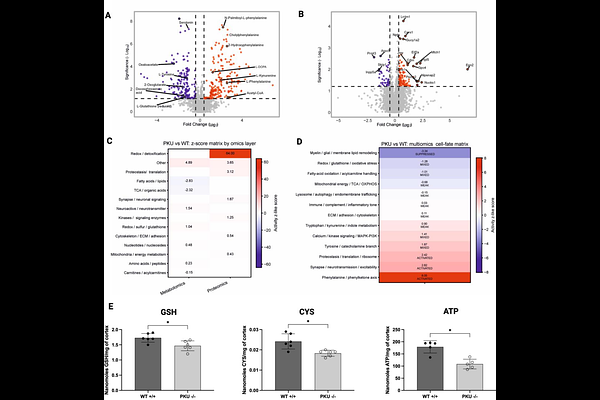
AbstractPhenylketonuria (PKU) is a genetic metabolic disorder caused by the lack of functional phenylalanine hydroxylase (PAH). Elevated levels of phenylalanine (Phe) are known to be neurotoxic; however, the molecular mechanisms underlying Phe's effects remain elusive. This study investigates the impact of PKU on proteostasis, redox balance, and metabolism in BTBR PAHenu2 mice, a severe disease animal model. Combined proteomics and metabolomics revealed impaired redox homeostasis in the brain and disrupted mitochondrial energy metabolism (ATP and TCA intermediates). The dysregulation was further supported by decreased levels of ATP, reduced glutathione (GSH), cysteine, and reduced catalase activity. Western blot analyses revealed substantial remodeling of protein degradation systems: the 19S regulatory (Rpt1) subunit and 26S proteasome content and activity were significantly increased, and ubiquitinated protein levels were elevated, indicating protein turnover and activation of the ubiquitin-proteasome system. Autophagy was also activated, as evidenced by a reduced LC3-II/LC3-I ratio, decreased p62 levels, unchanged ATG5 levels, and increased HSPA8 protein expression. By contrast, UPR markers remained stable despite an increase in the oxidized-to-reduced PDI ratio, suggesting a localized shift without activation of a full ER stress response. In parallel, systemic alterations were assessed in whole blood. Indeed, GSH, cysteine, ATP and ADP were decreased in PKU, whereas NADPH increased. These changes were accompanied by reduced activities of GSH reductase and GSH peroxidase, thereby confirming metabolic and redox disruption. Collectively, these findings indicate that PKU is associated with activation of protein degradation pathways as an adaptive response to cellular stress combined with redox imbalance and energy dysregulation.