Investigating the nicotinic receptor EAT-2 as a novel target to mitigate plant parasitic nematode infections

Investigating the nicotinic receptor EAT-2 as a novel target to mitigate plant parasitic nematode infections
Nvenankeng, H. A.; Hatch, E.; Thompson, J. R.; Harlow, P.; Goodchild, J.; Holden-Dye, L.; O'Connor, V.
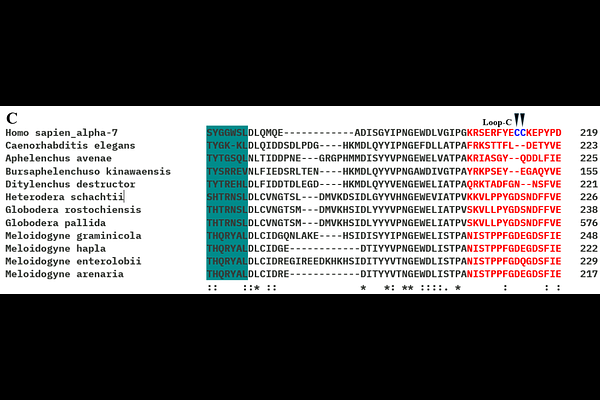
AbstractPlant parasitic nematodes (PPNs) are microscopic soil dwelling pests that infect crops, using a lance-like organ, the stylet, to hatch, invade plant roots, and establish feeding sites. Stylet function is underpinned by pharyngeal muscle contraction and relaxation cycles, making it an attractive route to disrupt the PPN lifecycle. However, knowledge of pharyngeal regulation in PPNs is relatively limited. In the free-living nematode Caenorhabditis elegans, the nicotinic receptor EAT-2 stimulates pharyngeal contraction to facilitate feeding. Here we hypothesize that EAT-2 orthologues may regulate a similar function in PPNs. A phylogenetic analysis reveals that EAT-2 and its orthologues in other nematode species cluster as a distinct group suggesting that EAT-2 is exclusive of other animal species. We identified eat-2 in the genome of the potato cyst nematode Globodera rostochiensis and used in situ hybridization to establish an anterior expression pattern consistent with a pharyngeal function. In vitro pharmacological assays directly compared the response of C. elegans pharynx and G. rostochiensis stylet to cholinergic compounds. Both pharyngeal and stylet activity were stimulated by acetylcholine and nicotine, and these responses were blocked by the nicotinic receptor antagonists, mecamylamine and tubocurarine. These data are consistent with a conserved cholinergic pathway mediated by EAT-2 regulating pharyngeal muscle function. It highlights EAT-2 as a potential determinant of stylet thrusting and a promising pharmacological target to selectively mitigate PPN infections.