Extracellular Vesicles From Metabolically Healthy Obesity Convey Distinct Molecular Signals That Initiate Endothelial Dysfunction: A Multi-Omics Study in Adults of African Ancestry

Extracellular Vesicles From Metabolically Healthy Obesity Convey Distinct Molecular Signals That Initiate Endothelial Dysfunction: A Multi-Omics Study in Adults of African Ancestry
Abbas, M.; Bragg, C.; Gharib, A. M.; Elkahloun, A. G.; Lindsey, M. L.; Gaye, A.
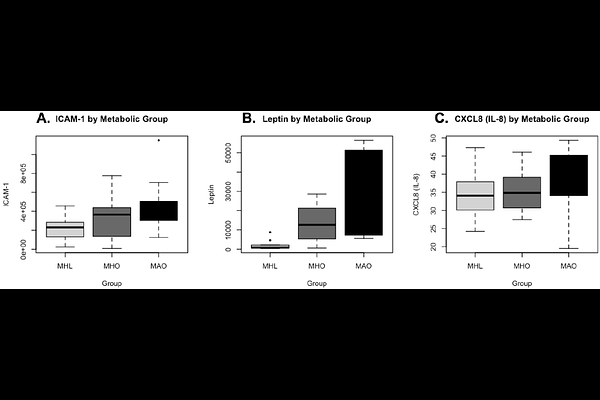
AbstractBackground: Metabolically healthy obesity (MHO) is unstable, with up to 80% of individuals progressing to metabolically abnormal obesity (MAO), yet mechanisms underlying this transition remain unclear. African Americans bear a disproportionate burden of obesity-related cardiovascular disease. Circulating extracellular vesicles (EVs) mediate inter-organ communication and may drive MAO-related vascular dysfunction. Methods: Adults of African ancestry were classified as metabolically healthy lean (MHL, n=14), MHO (n=9), or MAO (n=16). Plasma-derived EVs were characterized and their microRNA cargo profiled. Human coronary artery endothelial cells were treated with EVs from each group to assess nitric oxide signaling, oxidative stress, inflammatory activation, and mitochondrial dynamics. Results: MHO participants exhibited preserved insulin sensitivity and lower inflammation compared with MAO despite comparable adiposity. EVs from MHO carried a distinct microRNA signature enriched in miR-148a-5p, miR-181c-5p, and miR-1255a, linked to antioxidant and matrix regulatory pathways. MAO EVs were enriched in miR-3613-3p, miR-6842-3p, and miR-326, targeting inflammation and insulin resistance pathways. Compared with both MHL and MHO EVs, MAO EVs suppressed endothelial nitric oxide synthase phosphorylation and reduced nitric oxide bioavailability, with increased reactive oxygen species and ICAM-1 expression. MHO EVs induced an intermediate phenotype with disrupted mitochondrial morphology, supporting a graded continuum of endothelial stress. Conclusions: MHO represents a biologically active intermediate state. Circulating EVs from MHO individuals convey molecular signals that impair endothelial and mitochondrial function, predisposing to vascular injury and progression toward MAO. EV-associated microRNAs are mechanistic mediators and candidate biomarkers of metabolic and vascular deterioration in obesity.